

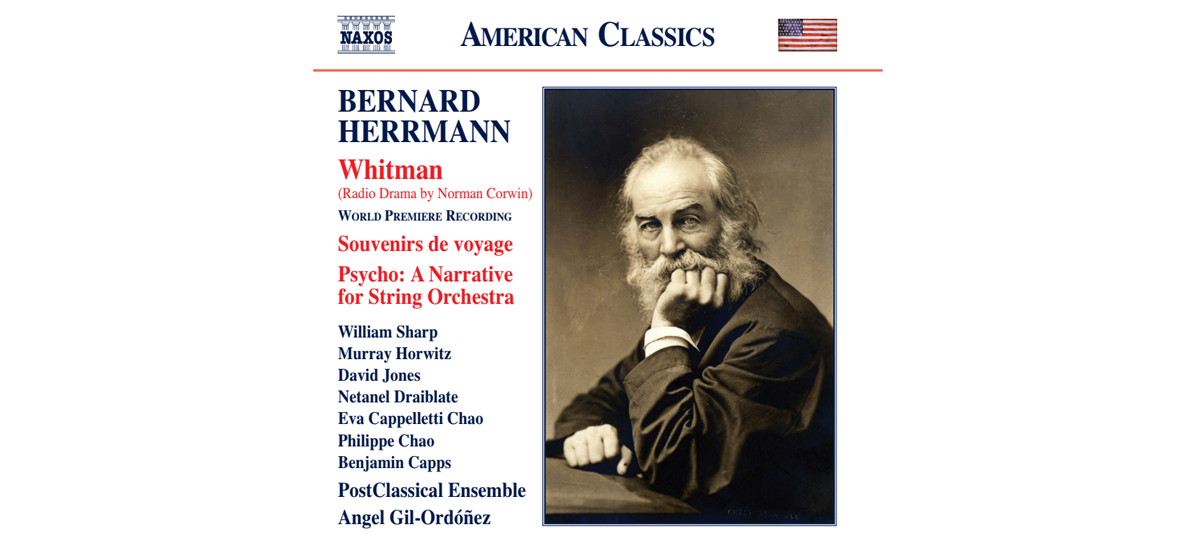
Norman Corwin was the genius of American radio drama. Bernard Herrmann, Hollywood’s supreme film composer (“Psycho,” “Citizen Kane,” “North by Northwest,” “Vertigo,” etc.) was also the foremost radio composer. In 1944, they created a classic radio drama, “Whitman,” to rally the home front during WW II with an appeal to the ideals of American democracy. Corwin’s script was culled from “Leaves of Grass.” A new, world-premiere recording, by PostClassical Ensemble, argues that “Whitman” deserves to live as a concert work for narrator and orchestra. It is also particularly timely at a fraught moment in American history when the fabric of the nation seems to be shredding. It bears mentioning that Corwin’s distinctive radio voice, generally, drew inspiration from Whitman’s poetic style. This is an element of Whitman’s legacy that has been little noticed.
Joseph Horowitz, who produced the recording, is an historian of American music whose 10 books explore the American experience.
Angel Gil-Ordonez, who conducted the new recording, is Music Director of PostClassical Ensemble.
William Sharp, a prominent American concert baritone, played Whitman in the new recording.
Murray Horwitz, who also took part in the recording, hosts radio’s “The Big Broadcast” and is an authority on radio drama.